Ever wanted to know what type of plane an aircraft was just by looking at it? In this series, we explore some key features on aircraft to look out for when spotting aircraft in order to identify them with ease.
The Airbus A330
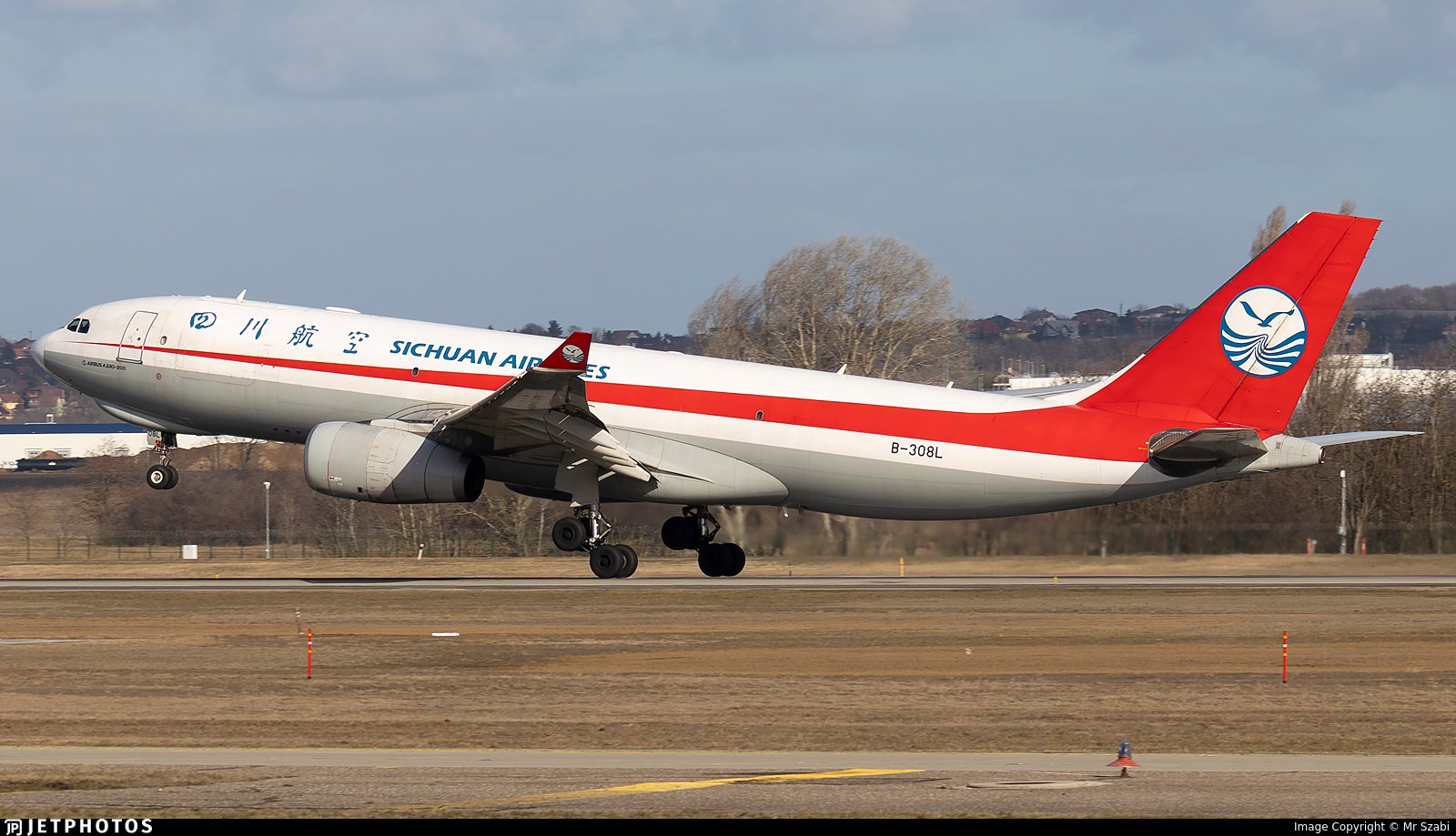
Often dubbed ‘The Butter Machine’ due to its smooth landings, the Airbus A330’s easily identifiable feature is its landing gear. The Airbus A330 has two sets of main landing gear, with four wheels on each. These ’tilt’ backwards, allowing for the smooth landings which the A330 often completes with ease.
The A330’s winglets also make it stand out from the other Airbus twin-jets. The A330’s winglets are short and wide, and go out at roughly a 45 degree angle from the wing. These have a “straight” design, in that they are not curved from the wing like some other Airbus wide-body aircraft.

Spotting the NEO
To many, the Airbus A330neo looks more like an A350 than the A330ceo variants (the A330-200 and -300). The main immediate difference between neo variants is the winglets. On the A330neo, these are curved from the wing, more similar to the A350’s wingtips than the A330ceo. The A330neo also almost always has a masked cockpit (the black paint around the cockpit windows) which is rare to see on the A330ceo variants. Also prevalent on the A330neo are engines which look much larger in diameter and shorter in length. This makes sense as “neo” stands for New Engine Option.

The Airbus A340
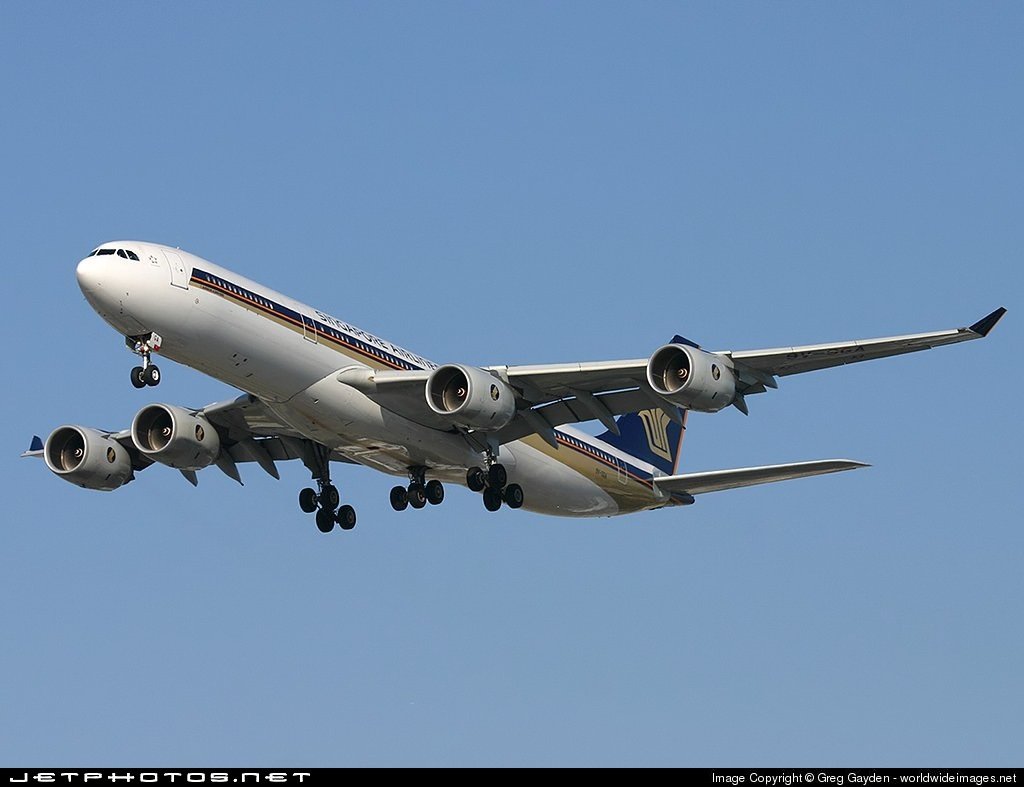
Due to entering service just a year apart, the A330 and A340 are very similar in features. Of course, the A340 stands out as it has four engines, being the most prevalent single-decked quad-jet still flying. The A340 was created when ETOPS ratings barely existed, so quad-jets were those which could fly the longest and over oceans. This meant that Airbus mostly designed the A340 to be a competitor to aircraft like the Boeing 747, whilst the A330 would rival the 767 or 757.
Aside from the engines, the A340 variants also have an extra set of landing gear. This takes the form of a mid-fuselage center landing gear. On the A340-200 and -300, it consists of a single axle, while the A340-500 and A340-600 variants feature a double axle. Because these variants are heavier, the extra landing gear is needed to allow for a larger maximum take-off weight.
The Airbus A350
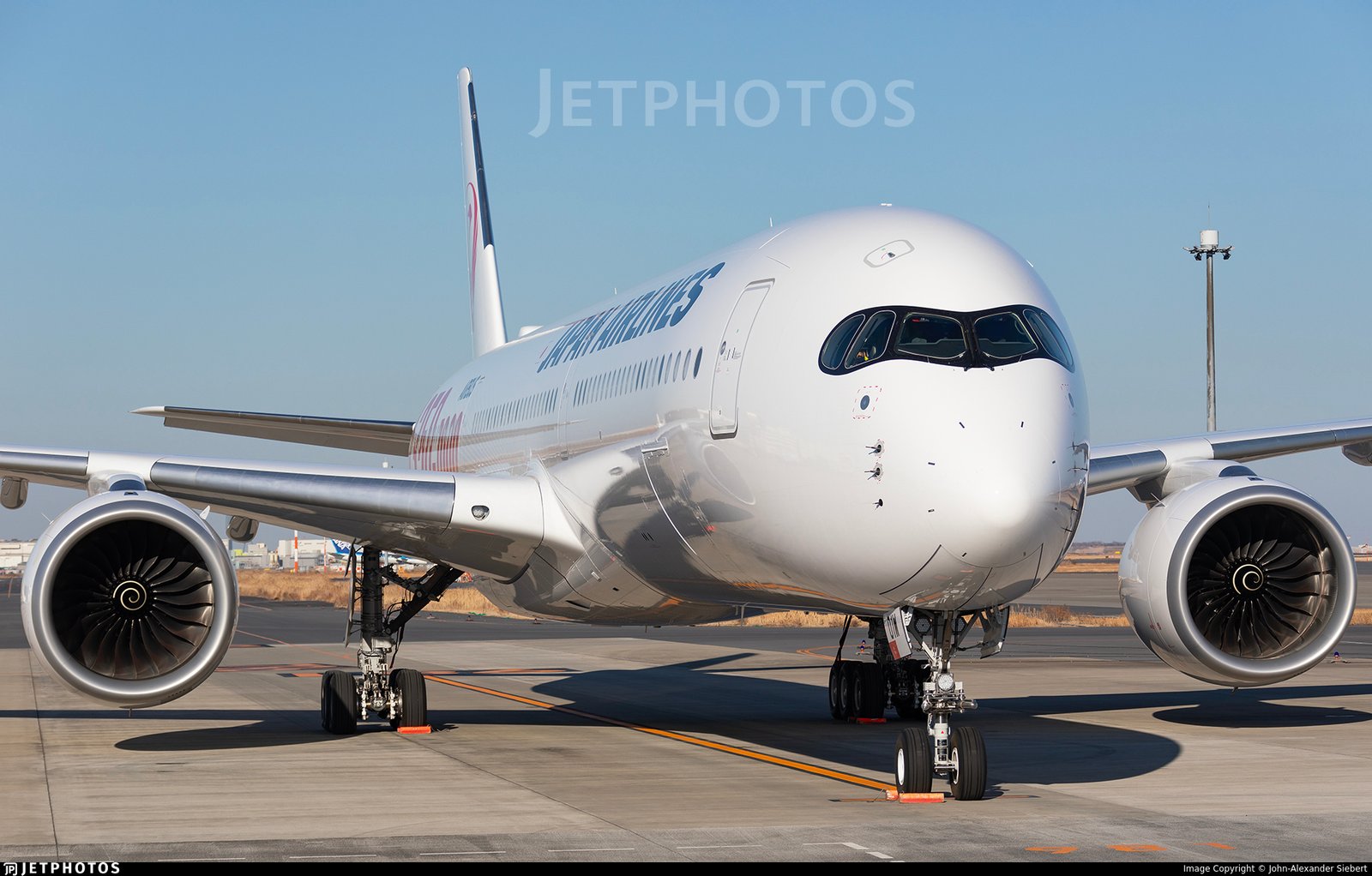
The A350’s windscreen is what really sets it apart. The A350 was where we first saw the masked cockpit design, making it look like all the cockpit windows are combined to become one large window. Similar to the Boeing 787, the A350’s cockpit also looks more like its blended into the nose, unlike other Airbus variants where the windows meet the fuselage at an angle. Also setting the A350 apart are its larger engines and sweeping wingtips.
The A350 has two variants, the A350-900 and the A350-1000. The -1000 is longer than the -900 and also features a larger main landing gear with 3 wheels.
The A380
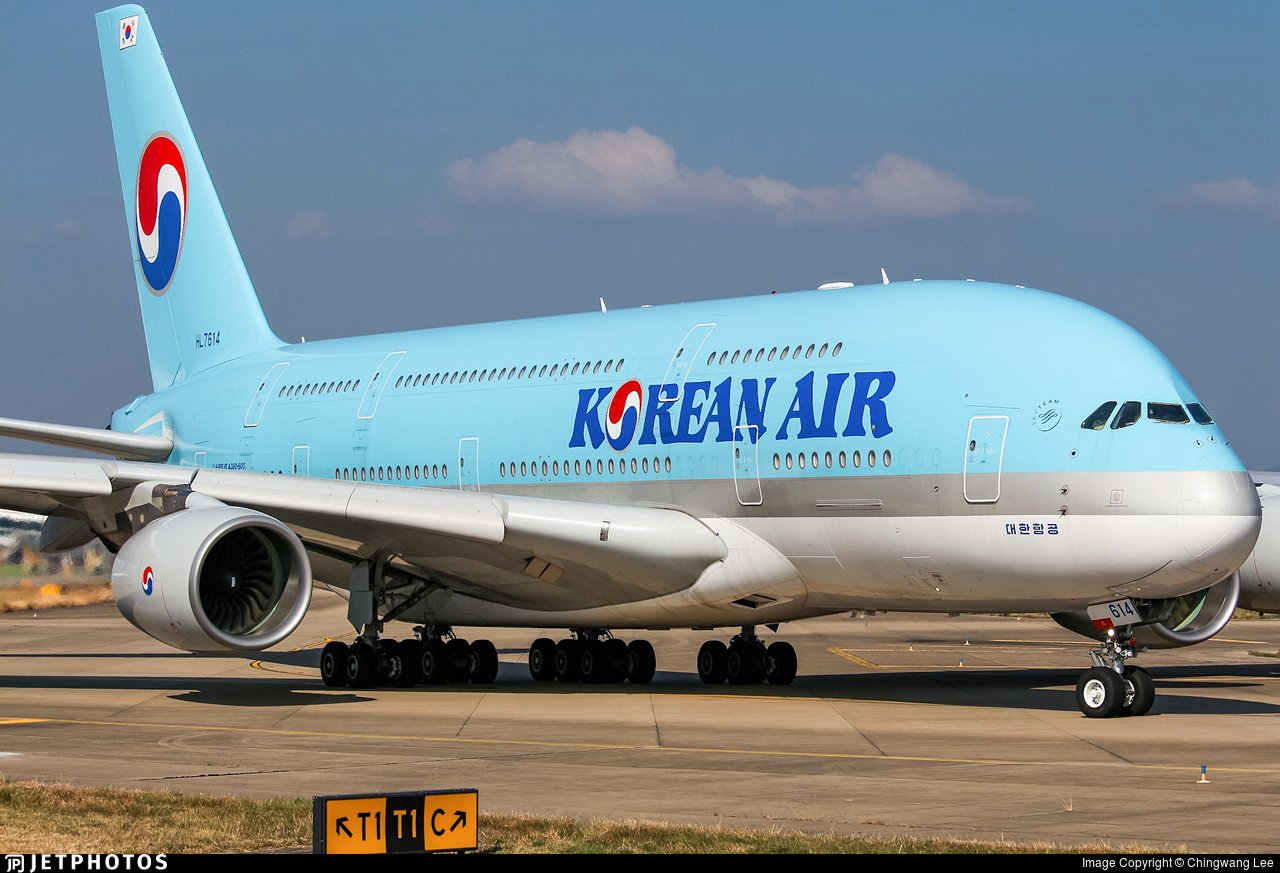
Being the largest commercial aircraft in the world, the A380 is quite hard to miss. It’s the only airliner to have two full upper decks, which are pretty easy to spot. The Airbus A380 also has wing fences on the edge of each wing, which is similar to Airbus’ older short-haul fleet but different to the wide-bodies. These look like small triangles on the edge of each wing.
Whether you’re an aviation enthusiast or not, it’s always nice to demonstrate your knowledge to others the next time a plane flies overheard. Whilst learning this can be difficult, Flightradar24 is always on hand to verify your work.
Do you have any tips for differentiating the Airbus wide-bodies? Let us know in the comments below.
The post Spotting the difference: The Airbus wide body fleet appeared first on Flightradar24 Blog.